Etsuko and Keiko's estrangement and unresolved guilt
A Pale View of HillsEtsuko and Keiko's estrangement and unresolved guilt are defined by a painful mismatch: Etsuko remembers opposing her daughter’s departure as an act of protection, while Keiko’s withdrawal had already made their home a place from which she kept herself apart. After Keiko leaves for Manchester and dies there, Etsuko’s recollections return to the closed bedroom, the final separation, and the possibility that her care did not reach the daughter it was meant to protect.
Identity and Background
Keiko is Etsuko’s daughter and the older sister of Niki. The sisters’ relationship was not close, despite Niki’s sense that sisters were expected to be close even when they did not particularly like one another. Niki says she had not told anyone how she felt about Keiko, partly because she was embarrassed and believed other people would not understand. She remembers Keiko chiefly as someone who used to make her miserable, yet was sad when she heard of her death. Her admission shows that family connection and emotional intimacy did not coincide: Niki’s grief persists even though her memories of sisterhood are strained and indistinct.
The distance between Etsuko and Keiko takes a different form. Etsuko’s account centers on Keiko’s prolonged retreat within the family home and on her own inability, in retrospect, to know what that isolation meant to her daughter. The relationship is presented through household routines and later recollection rather than a scene of reconciliation. After Keiko’s death, Etsuko recognizes the depth of the separation but cannot recover a conversation in which it was resolved.
Withdrawal and Life at Home
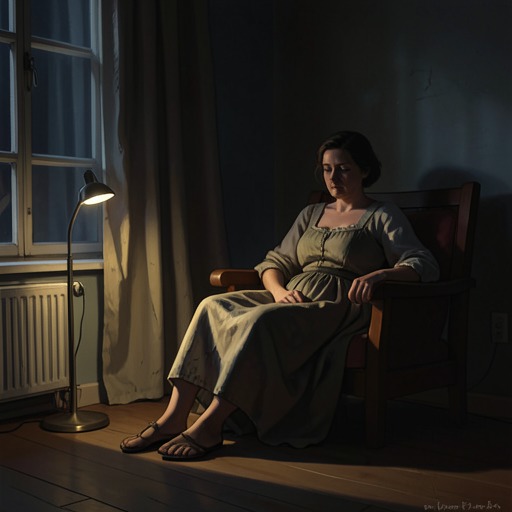
For the last two or three years before Keiko left, she increasingly shut the family out of her life and rarely emerged from her bedroom. The room became a guarded private domain: the rest of the household was not allowed in, and Etsuko understood that Keiko spent much of her time reading magazines and listening to the radio. Keiko had no friends, and her family’s knowledge of her day-to-day life was limited.
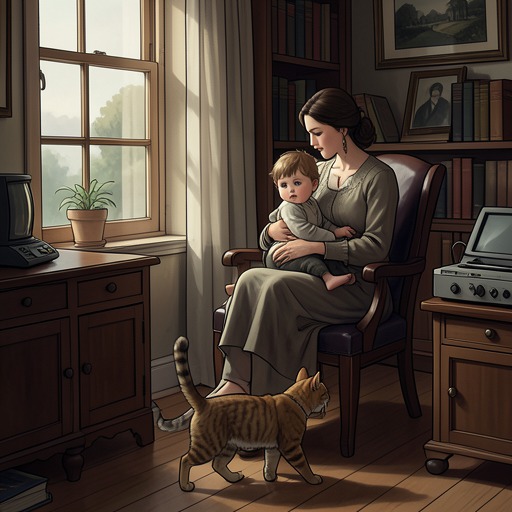
Their contact was reduced to repeated practical exchanges. Etsuko left Keiko’s plate in the kitchen; Keiko came down to collect it and returned to her room. Etsuko coaxed her to put out her laundry, and they reached an arrangement in which a bag of washing appeared outside Keiko’s door every few weeks. These small acts kept a domestic connection in place, but they did not break through the isolation that governed it.
When Keiko occasionally came into the living room, the family felt tense. Such visits often ended in arguments with Niki or Etsuko’s husband, after which Keiko returned to her room. The household eventually grew used to this pattern. In retrospect, the accommodation looks double-edged: it allowed daily life to continue, while the repeated withdrawal and conflict made Keiko’s distance seem like an established condition rather than a crisis that might be interrupted.
Departure and Etsuko’s Regret
Keiko eventually left home, and Etsuko later says that she regrets the attitudes she displayed toward her daughter. She acknowledges that a young woman of Keiko’s age might naturally wish to leave home. At the time, however, Etsuko thought the world outside would be too much for her unhappy daughter and opposed her departure vehemently in the belief that she was protecting her. The outcome, as Etsuko understands it later, was that Keiko left while severing her ties with her mother.
The force of that regret lies in the gap between intention and consequence. Etsuko does not say that she wanted to lose Keiko; she says that she had not imagined her daughter could vanish beyond her reach so quickly. Her account holds two positions together: she insists that her motives for leaving Japan were justifiable and that she kept Keiko’s interests at heart, while also recognizing that her opposition helped leave their relationship broken. Rather than resolving this contradiction, she tries to close off further reflection, saying there is little to gain from going over the past again. That refusal itself sits beside the persistence of her memories.
Death and the Room That Remains
Six years after Keiko left, the bedroom she had guarded still exerts a powerful hold over Etsuko. Although it is a pleasant room with a view across the orchard, Etsuko experiences it as Keiko’s territory, and her death makes its lingering presence stronger. When Niki asks to use the spare room instead, Etsuko initially makes a show of being upset, but admits privately that she, too, feels disturbed by the room opposite. The space preserves the shape of Keiko’s absence inside the family home.
Etsuko never saw the room in Manchester where Keiko died. On hearing that her daughter had died by suicide, her first thought was how long Keiko had been there before anyone found her. The coroner later said she had been dead for several days; the landlady opened the door because she thought Keiko had left without paying the rent. Etsuko connects that delayed discovery to the years when Keiko could be alone in the family home without being seen for days. The parallel does not establish that the two situations were the same, but it gives Etsuko’s memory of Keiko’s earlier isolation a terrible afterlife.
Etsuko repeatedly brings to mind the image of her daughter’s death. She says the horror has not diminished, though her relation to the thought has changed: it has become familiar through repetition rather than less painful. This ongoing recollection makes the loss inseparable from the question of whether Keiko had been unseen long before she died.
Family Memory and Unresolved Responsibility
Etsuko also resists explanations that place Keiko’s unhappiness entirely in her nature or in her relationship with her father. She recalls that Keiko and Niki shared fierce tempers and possessiveness when young, and that both could remain angry for much of a day. The sisters nevertheless followed sharply different later paths: Niki became a happy, confident young woman, while Keiko grew increasingly miserable and died by suicide. Etsuko does not find it as easy as her husband did to attribute that difference to nature or to blame Jiro, and she recognizes that treating family difficulties as someone else’s fault had been an easy explanation.
Niki later wonders whether her father should have looked after Keiko more, saying that he ignored her much of the time and that this was unfair. Etsuko answers that this was understandable because he was not Keiko’s real father, but Niki repeats that it was unfair. The exchange exposes a difference in how mother and daughter account for Keiko’s treatment: Etsuko invokes the limits of the parental relationship, while Niki insists that those limits do not erase the failure of care she perceives.
The relationship remains unresolved because Etsuko’s retrospective account contains both self-defense and regret. She maintains that she acted with Keiko’s interests in mind, yet remembers opposing her freedom to leave and acknowledges the finality of the separation. Keiko’s bedroom, the practical rituals of care, and Etsuko’s recurring thoughts after the death all give that unresolved bond a material and temporal form: the past is declared finished, but it continues to occupy the present.